

Quality Assured
Just Buy It
- Comparison
- 在线预约
- 预约申请
- 样品申请
- 在线询价

Erlenmeyer Flask,Wide-mouth
Erlenmeyer Flask,Wide-mouth
EF-W

Brand:
RUISCI
-
Click to select
- EF-W-03,25ml,576Pcs
- EF-W-05,50ml,240Pcs
- EF-W-10,100ml,180Pcs
- EF-W-15,150ml,180Pcs
- EF-W-20,200ml,120Pcs
- EF-W-25,250ml,72Pcs
- EF-W-30,300ml,60Pcs
- EF-W-50,500ml,60Pcs
- EF-W-1K,1L,24Pcs
- EF-W-2K,2L,12Pcs
- EF-W-3K,3L,8Pcs
- EF-W-03-E,25ml,1Pcs
- EF-W-05-E,50ml,1Pcs
- EF-W-10-E,100ml,1Pcs
- EF-W-15-E,150ml,1Pcs
- EF-W-20-E,200ml,1Pcs
- EF-W-25-E,250ml,1Pcs
- EF-W-30-E,300ml,1Pcs
- EF-W-50-E,500ml,1Pcs
- EF-W-1K-E,1L,1Pcs
- EF-W-2K-E,2L,1Pcs
- EF-W-3K-E,3L,1Pcs
Inventory
5896
隐藏域元素占位
Overview
Erlenmeyer Flask are frequently employed glassware in laboratories. Composed of high borosilicate glass, they exhibit exceptional chemical and thermal stability, being capable of withstanding the corrosion of multiple chemical reagents, adapting to significant temperature variations, and being less prone to fracture. The conical shape of the flask facilitates the mixing of liquids and the uniform distribution of heat. The wide-mouth enables the addition of reagents, stirring, and the observation of reactions with ease. The flat bottom ensures stable placement. They are extensively utilized in chemical, biological, and analytical experiments.
Features
1. High-temperature tolerance: Capable of withstanding relatively high temperatures and abrupt temperature variations of up to 200℃.
2. Low coefficient of thermal expansion: It has a low coefficient of thermal expansion, thus being less prone to cracking or deformation caused by temperature differences.
3. Wide-mouth: Facilitates the addition of substances, stirring, and cleaning.
4. Conical flask body: Ensures stable placement, is less likely to topple over, and reduces the possibility of liquid splashing during oscillation.
5. Uniform wall thickness: Enhances heat resistance and pressure resistance.
Technical data

Working Environment Conditions:
1. Temperature: The operating temperature can reach 280℃, with an instantaneous peak of 300℃. It can withstand a sudden temperature change of 200℃, and the temperature range is from -200℃ to +600℃.
2. Chemical Environment: It has a first-grade resistance to acids, a second-grade resistance to alkalis, and a first-grade resistance to water.
3. Physical Environment: It possesses high mechanical strength, good impact resistance, and superior light transmission performance.
Precautions:
1.Inspection: Before usage, meticulously inspect the conical flask for any cracks, damages, or other defects. If any are detected, it should not be utilized to prevent breakage and subsequent risks during the experiment.
2. Uniform Heating: During heating, ensure uniform heat distribution on the conical flask. Generally, an asbestos net should be used to avoid local overheating and cracking. Dry heating is prohibited.
3. Control of Liquid Volume: The liquid contained within the flask should not exceed two-thirds of its volume. When heating corrosive liquids, the mouth of the flask should be covered with a watch glass.
4. Prevention of Excessive Temperature Differences: Do not place a heated conical flask directly on an overly cold countertop to avoid sudden glass fractures due to drastic temperature changes.
5. Storage: Immediately after usage, wash, dry, and store the flask upside down. It is not advisable to store chemical reagents in it for an extended period.
keyword:
Previous:
- 产品描述
- 概要参数
- 技术参数
-
- Brand: RUISCI
- Commodity name: Erlenmeyer Flask,Wide-mouth
- Subtitle: Erlenmeyer Flask,Wide-mouth
- Model: EF-W
- 全部型号: EF-W-03,EF-W-05,EF-W-10,EF-W-15,EF-W-20,EF-W-25,EF-W-30,EF-W-50,EF-W-1K,EF-W-2K,EF-W-3K
Erlenmeyer Flask are frequently employed glassware in laboratories. Composed of high borosilicate glass, they exhibit exceptional chemical and thermal stability, being capable of withstanding the corrosion of multiple chemical reagents, adapting to significant temperature variations, and being less prone to fracture.
Erlenmeyer Flask are frequently employed glassware in laboratories. Composed of high borosilicate glass, they exhibit exceptional chemical and thermal stability, being capable of withstanding the corrosion of multiple chemical reagents, adapting to significant temperature variations, and being less prone to fracture. The conical shape of the flask facilitates the mixing of liquids and the uniform distribution of heat. The wide-mouth enables the addition of reagents, stirring, and the observation of reactions with ease. The flat bottom ensures stable placement. They are extensively utilized in chemical, biological, and analytical experiments.
-
1. High-temperature tolerance: Capable of withstanding relatively high temperatures and abrupt temperature variations of up to 200℃.
2. Low coefficient of thermal expansion: It has a low coefficient of thermal expansion, thus being less prone to cracking or deformation caused by temperature differences.
3. Wide-mouth: Facilitates the addition of substances, stirring, and cleaning.
4. Conical flask body: Ensures stable placement, is less likely to topple over, and reduces the possibility of liquid splashing during oscillation.
5. Uniform wall thickness: Enhances heat resistance and pressure resistance. -
Working Environment Conditions:
1. Temperature: The operating temperature can reach 280℃, with an instantaneous peak of 300℃. It can withstand a sudden temperature change of 200℃, and the temperature range is from -200℃ to +600℃.
2. Chemical Environment: It has a first-grade resistance to acids, a second-grade resistance to alkalis, and a first-grade resistance to water.
3. Physical Environment: It possesses high mechanical strength, good impact resistance, and superior light transmission performance.Precautions:
1.Inspection: Before usage, meticulously inspect the conical flask for any cracks, damages, or other defects. If any are detected, it should not be utilized to prevent breakage and subsequent risks during the experiment.
2. Uniform Heating: During heating, ensure uniform heat distribution on the conical flask. Generally, an asbestos net should be used to avoid local overheating and cracking. Dry heating is prohibited.
3. Control of Liquid Volume: The liquid contained within the flask should not exceed two-thirds of its volume. When heating corrosive liquids, the mouth of the flask should be covered with a watch glass.
4. Prevention of Excessive Temperature Differences: Do not place a heated conical flask directly on an overly cold countertop to avoid sudden glass fractures due to drastic temperature changes.
5. Storage: Immediately after usage, wash, dry, and store the flask upside down. It is not advisable to store chemical reagents in it for an extended period.
Q and A
Q
Distribution Modes:
A
Default Distribution Mode: EXW China Factory: After your payment is received, our customer service will contact you to confirm the pickup time and location once the goods are ready at the RUISCI China factory.
*Other options:
1.Carriage Paid To (CPT)
DO NOT PAY until you have contacted customer service to add shipping costs, as the default price is EXW China factory.
2.Delivered Duty Paid(DDP)
DO NOT PAY until you have ·contacted customer service to add Freight, insurance, taxes, customs clearance fees, and other miscellaneous expenses, as the default price is EXW China factory. Typically applies exclusively to small air cargo packages.
3. FOB China main port
DO NOT PAY until you have contacted customer service to add the inland charges and export declaration charges, as the default price is EXW China factory.
*** If you still need to consult other distribution modes or trade terms, please contact our customer service directly
Q
Payment methods:
A
1. On-line payment: Paypal
2. Off-line payment: Telegraphic Transfer (TT)
*All charges, except those incurred within our bank, are to be borne by the remitter. Insufficient payment will delay your shipment.
Download
There is currently no content to display
Related products

Price:
5
USD
Delivery:
7 Days

Price:
5
USD
Delivery:
7 Days

Price:
7
USD
Delivery:
7 Days

Erlenmeyer Flask,Ground Glass Joint
Price:
10
USD
Delivery:
7 Days
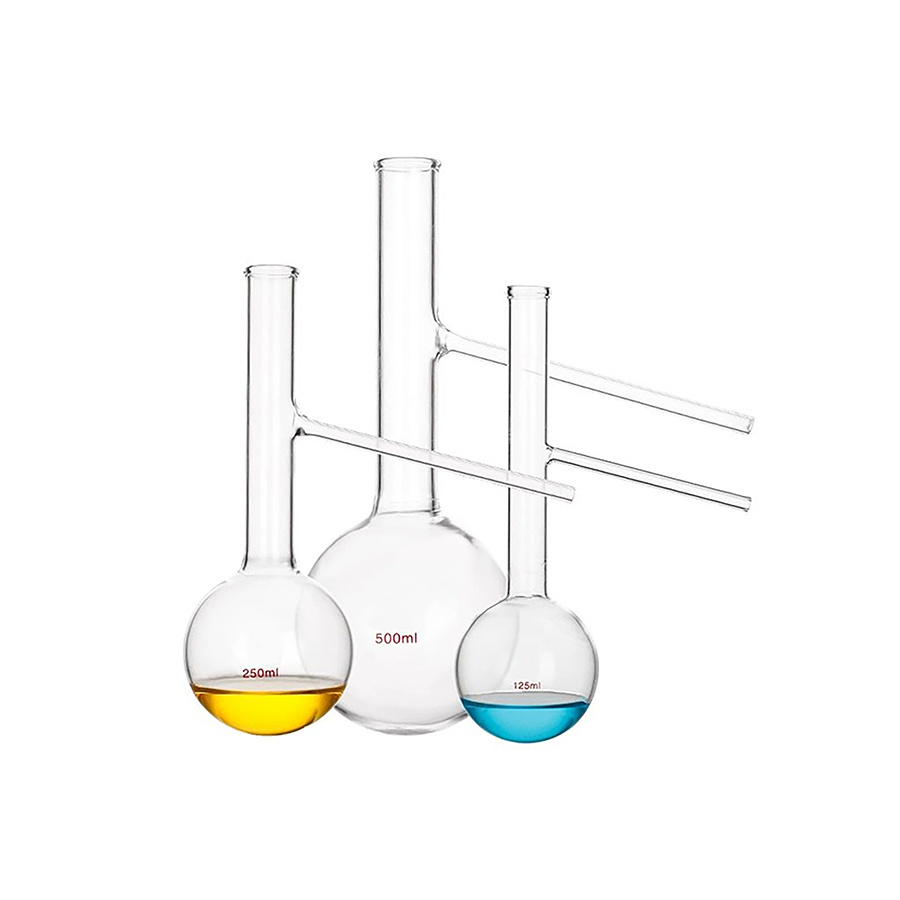
Distilling Flask With Side Tube,With Sidearm
Price:
6
USD
Delivery:
7 Days
Online consultation

RUISCI provides users with a complete set of certified high-quality products related to laboratory equipments, instruments, analytical methods, chemicals, consumables, and other analytical works.
RUISCI is a RUIANZE company